Showing posts with label epsom salt for dogs. Show all posts

How to Give a Dog an Epsom Salt Bath

Epsom salt baths can help reduce inflammation and keep cuts and scrapes clean, lessening the chance of infection. If your pup is the kind of canine who hates baths, you can tell him some good news: an Epsom salt bath isn't a true bath. But then you have to deliver the bad news: he has to stand in water for about 10 minutes. Have a question? Get an answer from a Vet now!
1
Fill your bathtub with enough warm water to submerge your pup's affected paw or leg. Make sure the water is fairly warm, but not so hot your little guy will be uncomfortable. If he's not a fan of baths, you can always fill a plastic container or something similar with water, just as long as he can step into it with the problematic paw or leg. He'll have to stand in there for a little while, so make sure he's comfortable.
2
Add 1 cup of Epsom salt per gallon of water. Mix the salt around in the water so that it dissolves. Don't worry about being exact with your measurements. You won't hurt your pup if you add a bit too much or are just under a cup.
3
Persuade your pup to step into the water. If you're filling up a bathtub, call him in after you have the water turned off, especially if he's weary of running water. If he's not having any of this bath stuff and refuses to step in, gently lift his paw or leg and set it into the water, or lift him into the tub.
4
Let his paw or leg soak in the water for about 10 minutes. You can massage the affected area if you want, just to keep him calm and feeling comfortable.
5
Lift his paw out of the water. Rinse his paw and leg with lots of fresh water so all the salt comes off. Pat dry the area and let him run off and do those extremely important canine tasks. Drain or dump the water, and repeat the entire process once more later in the day. Continue the salt soaks twice-daily until his injury is all healed up.

Epsom Salt for Acne


Acne is one of the most common skin disease, which results into pimples, blackheads or whiteheads. The most commonly affected areas are face, neck, chest, upper arms or the back. When dirt and bacteria are trapped in oil secreting pores, it results in inflation, that is identified as acne. Many methods are adopted to get rid of acne, but most people prefer home remedies. Epsom salt can be used for getting rid of acne at home. Epsom salt or magnesium sulfate is a combination of naturally occurring compound consisting magnesium, sulfur and oxygen. While magnesium helps to release stress and provides relief for aching muscles and joints; the sulfur content renders its anti-bacterial, anti-viral and anti-fungal properties that makes Epsom salt a popular home remedy for acne.

Is Epsom Salt Any Good for Acne?
Yes, it is. The many beneficial characteristics of Epsom salt will reap desired results when you choose it for acne treatment. Epsom salt is a naturally occurring mineral, magnesium sulfate. It has many medicinal uses, and can be used for a bath, as a soothing agent for itchy dry skin, laxative and also to treat acne! It is used as an anti-inflammatory that is known to reduce skin irritation and redness. Epsom salt is also used to treat sprains, strains and pulled muscles. Here are some ways in which it can be used to get rid of acne.
Using Epsom Salt for Treating Acne

A Cleanser
Mix ½ tablespoon of Epsom salt to your daily cleansing cream. Massage it on the affected area. Remember to massage gently. Rubbing the mixture harshly might spread the infection to the surrounding area. After about 15 minutes, wash your face with cold water and pat dry. Alternately, you can try this method with a massaging cream instead of a cleanser. This will help exfoliate the dead skin, and in turn, reduce the visibility of acne. 

Soak Cotton
Dissolve about 2 tablespoons of Epsom salt in a cup of water. Dip cotton into it and place it only on the affected area. Keep this for 15 to 20 minutes, and then rinse it. 

Mask it
Mix 1 tablespoon of cognac, 1 tablespoon of dry milk, 1 tablespoon fresh lime juice and half tablespoon of Epsom salt in a bowl. Apply it on the affected area and keep it masked until dry. Let the mask dry naturally. Rinse off with cold water.

Scrub
Add a tablespoon of Epsom salt to oatmeal and use this to scrub the affected area. Wash your face thoroughly and apply moisturizer after patting your face dry.

Smooth Skin
Acne will introduce unwanted bumps on your skin. For a smoother and acne free skin, wet the affected areas and simply start massaging with a handful of Epsom salt. 

Detoxifying Bath
If acne has affected different areas of the body at the same time, and your hand may not reach all the affected areas easily; for example, your back, then you can use Epsom salt in a bathtub. You will need 1 cup of Epsom salt, 2 tablespoons of sea salt and 2 tablespoons of bath oil. Pour all these in your hot bathtub while the tub is still filling up. Step into the tub and relax your senses while the salt works on the acne. 

Though acne cannot be cured completely, we can always take measures to prevent it with proper skin care. You can use any such method on a regular basis to keep acne away. 
Disclaimer: This article is for informative purposes only and does not in any way attempt to replace the advice offered by an expert on the subject. These suggestions may or may not help you get rid of pimples overnight. The efficacy will depend upon two parameters - duration and intensity of the pimple outbreak and your skin type/sensitivity. Please consult your health care provider, or consult a dermatologist before making any health-related decision.
Read more at Buzzle: http://www.buzzle.com/articles/epsom-salt-for-acne.html

5 Luxurious Ways to Use Epsom Salts For Beauty

According to the Epsom Salt Council (yes, it exists!), there are many beauty benefits to Epsom salts, aka magnesium sulfate, as it's known in the world of science. So before you dismiss that unassuming milk-carton-like box at the drugstore, here are five reasons you might want to give these soothing salts a whirl.
  1. As a hair volumizer: Much like sea salt sprays give hair body, Epsom salts help boost texture, too. Who knew?
  2. As a stress reducer: These salts aid in replenishing magnesium in the body, which can make energy levels increase. Which, in turn, can make you look better. A lift in magnesium also relieves stress, increasing serotonin levels and lowering blood pressure. It's a win all around.
  3. As a rejuvenating body scrub: Not only do the salts deep clean, but massaging handfuls of the crystals on premoistened skin can result in an exfoliating experience.
  4. As an mini facial experience: To help dry out oily skin and invigorate all other skin types, mix 1/2 teaspoon of Epsom salts with your face cleanser, and then massage for a mini facial.
  5. As a skin-softening mask: For normal to dry skin, whip up a three-ingredient facial mask: blend 1/4 cup grated carrot, 1/2 teaspoon Epsom salts, and 1 1/2 teaspoons mayonnaise. Spread over predampened skin, wait 10 minutes, and remove.
Source: http://www.bellasugar.com/

Epsom Salt Uses for Dogs

Epsom Salts to Relieve Dog's Itching

  • Dogs, like people, suffer from itching. Isolating the cause of the itching is important for the dog's health. Relieving a dog's itching while the cause is under investigation is crucial. Bathe a dog in a cool water Epsom salt bath to provide relief from itching.

Epsom Salts to Help Empty a Dog's Anal Sacs

  • Dogs have two anal sacs that fill with fluid each day and are normally emptied during defecation. Sometimes the anal sacs do not empty, which is an irritating and possibly painful situation for the dog. An Epsom salt bath can liquify the contents of the anal sacs and aid in muscle relaxation. Bathe a cooperative dog in a few inches of Epsom salt water in the bathtub. Use a hand towel to apply the Epsom salt water to the rear of an uncooperative dog.
  • Epsom Salts to Treat a Dog's Abscessed Nail Bed or Paw

    • Treat a dog with an abscessed nail bed with an Epsom salt bath to draw out infection and to provide relief from itching.

    Tips and Warnings About Epsom Salt Use for Dogs

    • Use an Epsom salt ratio of 1/2 cup Epsom salt per gallon of water and soak for 5 to 10 minutes at a time. Monitor dogs in an Epsom salt bath closely to ensure they do not drink the bath water, which can cause diarrhe

Benefits of an Epsom salt bath

Just one Epsom salt bath a week can have an incredible impact on your health and emotional wellness.

Magnesium (found in Epsom salt) helps draw inflammation out of the muscles

Sulfates help improve the absorption of nutrients, flush toxins and help ease migraine headaches.
Helps muscles and nerves function properly

Combat muscle fatigue

Relieve pain and muscle cramps

Improved concentration and sleep

Increased energy, elimination of toxins and reduction of inflammation

Magnesium and serotonin deficiencies have been found to exacerbate PMS symptoms

Starting Epsom salt baths as early as two weeks before your period will lead to less pain and significantly fewer negative mood changes frequently associated with menses

*Note: Consult with your medical provider before using Epsom salts if you are pregnant or have any medical condition.
How to make an Epsom salt bath


Making an Epsom salt bath is simple:

First things first;

1) break out your favorite rubber ducky.

2) Set a relaxing, spa mood with some scented candles.

3) Fill bathtub with hot or warm water.

4) Add between two and four cups of Epsom salt to the water.
I poured the whole box containing 375g of Epsom salts into the tub.

5) Mix the water with your hands and allow the Epsom salt to dissolve.

6) Add five to ten drops of your favorite essential oil just before you step in the tub to maximize stress reduction.

My favorites are either lavender, rose or chamomile essential oils.
Soak in the bath for about 15 minute but no longer to avoid reabsorbing the toxins eliminated by the Epsom salt.

7) Soak in the bath for about 15 minute but no longer to avoid reabsorbing the toxins eliminated by the Epsom salt.

8) Shower immediately after the bath to rinse the Epsom salts from your skin, which can dry your skin.

(Caution: Epsom salt, due to its high magnesium content, is a laxative. Avoid ingestion!)

9) Dry off with a towel and keep your skin hydrated with your favorite body moisturizer.

10) Water aids in muscle recovery so make sure you drink enough water throughout the day!
Source: http://www.withlovefay.com/

Epsom Salt Baths Improve Health


Epsom salt baths have become my latest indulgence. When I want a quiet, relaxing moment, I pour an Epsom salt bath, lock the bathroom door so my kids don’t barge in, turn down the lights, start my MP3 player on my favorite music, and … soak.
Yet Epsom salt baths don’t just calm noisy souls, they improve health as well!
That’s because Epsom salt isn’t salt at all, but really magnesium-sulfate. It’s merely called “Epsom” because magnesium-sulfate was discovered in Epsom, England. The Journal of the American College of Nutrition says that at least 68% of us are magnesium deficient (most likely more), leading to a host of health problems. Thankfully, Epsom salt baths can be one more tool to help us combat that deficiency and improve our health.

Why are we magnesium deficient?

Depleted soil.

Industrial agriculture depletes soil of nutrients. Rather than fertilizing with rich, vibrant compost, we treat the soil with synthetic fertilizers. In the The Fatal Harvest Reader: The Tragedy of Industrial Agriculture, Jason McKenney writes about the effect synthetic fertilizers have on the soil:
We now know that massive use of synthetic fertilizers to create artificial fertility has had a cascade of adverse effects on natural soil fertility and the entire soil system. Fertilizer application begins the destruction of soil biodiversity by diminishing the role of nitrogen fixing bacteria and amplifying the role of everything that feeds on nitrogen. These feeders then speed up the decomposition of organic matter and humus. As organic matter decreases, the physical structure of soil changes. With less pore space and less of their sponge-like qualities, soils are less efficient at storing water and air. More irrigation is needed. Water leeches through soils, draining away nutrients that no longer have an effective susbstrate on which to cling. With less available oxygen, the growth of soil microbiology slows, and the intricate ecosystem of biological exchanges breaks down.
Magnesium is among the myriad of minerals lost to industrial agriculture practices. If the nutrients aren’t in the soil, they aren’t in our food.

Municipal water supplies.

In 2007, Life Extension Magazine ran a report on magnesium deficiency. In it, they pegged city water supplies as one of the main culprits:
Our human ancestors evolved in a world in which healthy drinking water came directly from streams, rivers, and lakes, rich in mineral content. The human body became reliant on obtaining a considerable proportion of its daily mineral needs from natural water sources.
Fast-forward to the twenty-first century. We obtain drinking water from a spigot or a plastic bottle. Pesticides and other chemicals seeping into the water supply have made everyone suspicious of water quality. As a result, municipal water-purification facilities have intensified their efforts to remove contaminants like lead, pesticide residues, and nitrates from drinking water. Unfortunately, these modern water-treatment methods also deplete drinking water of desirable minerals like calcium and magnesium.
(source)

Too much calcium.

We need calcium to absorb magnesium. Yet’ it’s a delicate balance because the two minerals compete for resources within our body. If you eat too much calcium, you actually hinder your absorption of magnesium.
Studies indicate that taking a calcium supplement without enough magnesium can increase the shortage of both nutrients. Researchers have found that many Americans have five times as much calcium as magnesium in their bodies, although the proper ratio for optimum absorption of both minerals is two to one.
(source)
For more on magnesium deficiency, read Magnesium Deficiency: Symptoms, Causes, & Treatments.

How do Epsom salt baths improve health?

According to the Epsom Salt Industry Council, correcting magnesium deficiency leads to:
  • Improved heart and circulatory health, reducing irregular heartbeats, preventing hardening of the arteries, reducing blood clots and lowering blood pressure.
  • Improved ability for the body to use insulin, reducing the incidence or severity of diabetes.
  • Flushed toxins and heavy metals from the cells, easing muscle pain and helping the body to eliminate harmful substances.
  • Improved nerve function by electrolyte regulation. Also, calcium is the main conductor for electrical current in the body, and magnesium is necessary to maintain proper calcium levels in the blood.
  • Relieved stress. Excess adrenaline and stress are believed to drain magnesium, a natural stress reliever, from the body. Magnesium is necessary for the body to bind adequate amounts of serotonin, a mood-elevating chemical within the brain that creates a feeling of well being and relaxation.
  • Reduced inflammation to relieve pain and muscle cramps.
  • Improved oxygen use.
  • Improved absorption of nutrients.
  • Prevention or easing of migraine headaches.
Furthermore, the sulfate in Epsom salts:
  • Improves absorption of nutrients by starting the cascade of digestive enzymes released from the pancreas.
  • Helps form the mucin proteins which line the gut walls. Mucin stops the intestine’s content from ‘sticking’ and blocks the transport of toxins from the gut to the bloodstream. Patients who have a leaky gut (like those with IBS) have low blood plasma sulfate levels.
  • Helps with the formation of brain tissue. Pregnant ladies, pay attention! When en utero, neurons are created on chains of sulfated carbohydrate. Reduces sulfation may lead to fault neural connections and dysfunction later in life!
  • Plays a key role in detoxifying drugs and environmental contaminants from your body.
To top it all off, both magnesium and sulfate are more easily absorbed transdermally through the skin than they are internally!


How to take an Epsom Salt bath.

If you want truly therapeutic levels of magnesium, this study found consistent, significant improvement in magnesium levels after participants soaked for at least 15 minutes in a 1% solution of Epsom salts. For a typical bath tub, that’d be about a pound of Epsom salt per bath! Participants complained that the 1% solution was too “soapy” feeling.
Since my goal is comfort as well as therapy, I opt for less Epsom salts and a longer soak.

To make an Epsom salt bath:

Dissolve 2 cups of Epsom salts in a bathtub full of warm or hot water. Soak for at least 20 minutes before you attend to any personal hygiene like washing your hair or shaving.
Take this soothing Epsom salt bath about 3 times per week.

To make an Epsom salt foot soak:

Epsom Salt Bath Sore Feet Soak

When I was younger, I never understood why all the mothers in my life soaked their feet in an Epsom salt foot bath.
What made the Epsom salts any better than plain hot water?
Turns out, an Epsom salt foot bath is great for reducing foot aches and pains because of its documented anti-inflammatory properties.
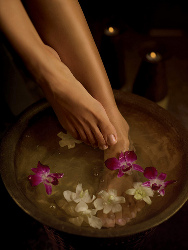
To make a foot soak, dissolve 1/2 cup of Epsom salt in a large bowl or small tub of warm or hot water. If you want a relaxing fragrance for your foot bath, add a few drops of lavender essential oil to the water. Soak your sore feet for at least 15 minutes and watch your aches melt away!

Source: http://www.foodrenegade.com/

Calm Your Inner Soul and Relax with an Epsom Salt Detox Bath

epsom salt detox bath
Epsom salt detox baths are a great way to detoxify your body, de-stress, and boost your immune system.
I can not get enough of Epsom salt detox baths! I love how rejuvenated and energized I feel from them. Especially if you’re feeling sluggish or overstressed, Epsom salt detox baths will rid your body of the toxins and ease any of these symptoms.
Since toxins and chemicals are all around us, everyone can benefit from a detox bath. Even though there are many things we can do to avoid toxins, some are unavoidable in our environment. A detox bath is a great way to rid yourself of any harmful substances.

What is Epsom salt?

Epsom salt is rich in both magnesium and sulfate. Magnesium and sulfate can be easily absorbed through the skin. Studies have shown the effectiveness of using Epsom salt detox baths to increase the levels of both of these. In an Epsom salt detox bath, the magnesium sulfate is absorbed through the skin which aids in detoxification.

How an Epsom Salt Detox Bath Works

An Epsom salt detox bath is an excellent external way to detox and get out any harmful and unnatural substances. Our skin is our largest organ and our primary detox organ, which is why a detox bath is so beneficial.
A detox bath stimulates your lymph system and encourages increased oxygen and blood flow to your body.  The detox bath helps strengthen the immune system and soothe your body. The sulfates  from Epsom salts are very beneficial as they are essential for the formation of proteins lining the digestive tract. Sulfates also stimulate the pancreas to form digestive enzymes necessary to detoxify the body. This detox bath will help neutralize toxins and aid in protecting the body from heavy metals.
Soaking in Epsom salts also boosts the body’s magnesium levels as it is easily absorbed.

How to Take an Epsom Salt Detox Bath

Epsom salt detox bath recipe

2 cups of Epsom salt
5-10 drops of detox essential oil
For the Epsom salt detox bath it is best to use comfortably warm water.  Using too hot water will dry out your skin and strip away protective oils. The common amount to use is 2 cups of Epsom salt for a standard size bathtub. If your bathtub is larger or smaller, you may want to adjust the amount.
It is most beneficial to soak in the detox bath for about 40 minutes. This allows for enough time for your body to remove the toxins and to absorb minerals in the water.
Adding detox essential oils such as lavender, rose, sandalwood, or tea tree oil will aid in being therapeutic and assist in the detoxification.

How often Can You Use an Epsom Salt Detox Bath?

If this is your first time using an Epsom salt detox bath you may want to start out with using it twice a week and as your body adjusts you can increase the frequency.

After the Epsom Salt Detox Bath

To aid in detoxification, after the bath you many want to rub down your body with a boars body brush or loofah. This brushing stimulates the lymphatic system which will also help release toxins.
Source: http://www.healthextremist.com

How Can I Use Epson Salt


Best advice is to watch your plants toward the end of the growing season. If they start to show yellowing leaves and you’ve ruled out other diseases, you could try adding a tablespoon of epsom salt around the base of the plant, making sure to water it in well. Some report that peppers are heavy magnesium feeders so this could be the reason for the use of epsom salts. Some also suggest starting the treatment at first bloom to thwart the late season deficiency.


I have heard about using epsom salt for bell peppers to help them grow. I wish to know more about this natural mineral & peppers. Thank you, Gale

AnswerEpsom salt is a good source for the trace nutrients magnesium and sulfur. Late in the season tomatoes and pepper plants may start to show signs of deficiencies, such as leaves yellowing between the veins and a decrease in fruit production. This looks similar to blight, but blight will appear as blotchy brown spots on the leaves and stems. Be sure to confirm which it is.
Before randomly adding nutrients it’s always best to obtain a soil test to evaluate the levels of trace minerals in your growing area. Too high a level of calcium will inhibit the plants’ uptake of magnesium, and depending on your soil type you might require more than just what one nutrient can add.


Happy gardening,
Karen

- See more at: http://blog.gardenharvestsupply.com/2011/09/02/how-can-i-use-epson-salt/#sthash.4RZXXJPp.dpuf